Fear Not!365 Days a Year
Learn How To Overcome Fear



By Brandon Markette
If there exists one experience that, throughout history and around the world, binds mankind together, it is death. Death is something we all must face -- no exercise or diet regimen, no meditation techniques, no amount of money can avoid it. It is the great equalizer.
The finality of death, coupled with the uncertainty of an afterlife, results in fear, for many. We see it all around us as we try so hard to stop the aging process. We hope that the next pill, the next surgery, or the next genetic discovery will be the key to extending our lives.
Not everyone, however, faces death with fear and uncertainty. A few years ago a friend of mine faced this faceless enemy. At 16 he was diagnosed with stomach cancer. The doctors tried every treatment at their disposal, all to no avail. For a year and a half Rob was in three different hospitals in two different cities. In that time he lost 90 pounds and all of his hair. He was an inpatient and an outpatient. Sadly, after 18 months, nothing remained to be done for him.
Having reached the end of their rope, Rob's doctors did the only thing left to do. They sent him home to try to enjoy the last days of his life. At this point, I was horribly sad, afraid of losing a dear friend and mad at God. I was mad that God did not heal him. I was also mad that Rob would miss out on so much.
Amazingly, Rob did not share my anger. In fact, he seemed to be meeting this horrible fate with the anxiety one might experience on a first date. To this day, when I think of his peace in the face of the storm, I am in awe.
His peace was not merely an inborn, laid-back look at life. Nor did it spring from a devil-may-care attitude. Instead it came from a decision Rob made only months before the initial diagnosis. With that decision, Rob found peace with God.
The peace Rob knew, he found in the Bible. In the book of Romans, he read that "all have sinned and fall short of the glory of God" (Romans 3:23). He also read, "The wages of sin is death, but the gift of God is eternal life in Christ Jesus" (Romans 6:23).
Jesus is the one Isaiah referred to when he wrote, "And His name will be called Wonderful Counselor, Mighty God, Eternal Father, Prince of Peace" (Isaiah 9:6). The Prince of Peace came to Earth so that each person might have peace with God. Rob decided to put his trust in Jesus, and this peace became very evident.
Rob is not the only person who needs to make this decision, we all do. We must decide if we will accept God's gift of eternal life. If we reject God's gift, we are condemned to spiritual death -- eternal separation from God. If we do accept, however, then eternal life is ours.
While this eternal life does not mean we will escape physical death, we can face death a lot easier knowing that it leads to eternal life in heaven. This is the truth which Rob discovered, and the ensuing relationship with God made all the difference in the world. This is the truth I have discovered, and the relationship makes all the difference everyday of my life.
While we certainly see fear in Christ, we quickly note that his decisions are not predicated upon fear. Take, for example, the cross. In Gethsemane Christ clearly experiences fear. He prays that the cross might be taken from Him. Yet, his fear does not motivate Christ's action. He acts despite that fear, not because of it. Christ doesn't try to avoid the cross, but embraces it. He concludes His prayer, 'Thy will be done.'

I am a follower of Christ, trying to arrange my life, family and ministry around the teaching of Jesus. So, the Christlike Christian is one who learns to act, not according to his fears, but according to the will of God—in spite of his fears. Thus, the product of fear—a Christian seeking to avoid danger—is not the mature Christian Christ seeks.

By Jim Brownson
What does the Bible say about death and resurrection? The meaning of the resurrection in Scripture is marked by two distinct emphases, and it is useful to differentiate between them. One of them is the immortality of the soul, which is a property of the soul by virtue of its nature, and involves an afterlife in either heaven or hell. We all survive death, and either go to be in heaven, or to suffer in hell, while we wait for the resurrection of the body. This brings us to the second meaning: the resurrection of the body, which occurs at the end of time as we know it. This involves the raising of physical bodies from the dead when Christ returns.
The Sadducees argued, in numerous New Testament texts, that there was no resurrection of the dead (Matthew 22:23, Mark 12:18, Luke 20:27, and others). Yet the immortality of the soul is often assumed in the New Testament, even in the words of Jesus, who says to one of the men who was crucified with him, "Truly I tell you, today you will be with me in Paradise" (Luke 23:43). This seems to presuppose a dwelling in Paradise, quite apart from any notion of the resurrection, since Jesus was raised, but there was no general resurrection.
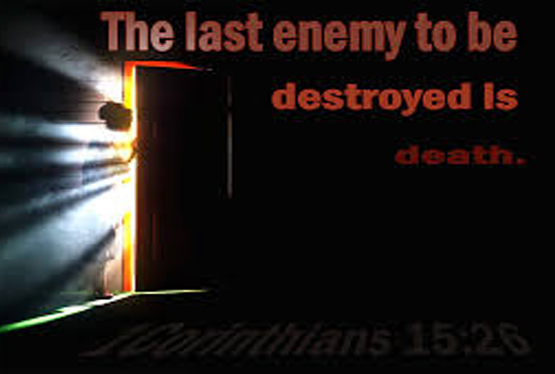
We see these two distinct emphases in other passages of Scripture, too. For example, Paul, in his early discussion of the resurrection in 1 Corinthians 15:26, states that "the last enemy to be destroyed is death." This sounds very much like the emphasis on the resurrection of the body. But his further discussion seems to move more in the direction of the immortality of the soul. First Corinthians 15:44 states, "it is sown a physical body, it is raised a spiritual body." Hence, for Paul, the physical is a prelude to the spiritual. This seems very close to the notion of the immortality of the soul.
We see these same two emphases, even more starkly, in contemporary Christian practice. For example, many folks assume that when they die, their spirits will be connected to loved ones who have died before them. This is clearly based on the immortality of the soul, quite apart from any notion of resurrection. It presupposes only that those who have died have gone to heaven, rather than hell, and so will be seen by loved ones after death, quite apart from any resurrection at the end of time, when the new heaven and the new earth will appear (Revelation 21).
What are we to make of this tension? On the one hand, we could say, "when you are dead, you're dead" and abandon any notion of the immortality of the soul. However, this seems to ignore those New Testament texts that seem much more open to the immortality of the soul, including the words of Jesus himself cited above. On the other hand, we might abandon the notion of a final resurrection, and simply affirm the immortality of the soul. Yet this seems to avoid a significant number of New Testament texts as well.
Or we can simply hold the tension, affirming both, without calling either into question. That is what I am recommending. This is not without its own tensions, since the two concepts are not entirely compatible with each other. If the soul is immortal, why should the body be raised from the dead? If bodies are raised, why do we also believe in the immortality of the soul? Obviously, the resurrection of Jesus is part of this, since the gospel affirms that Jesus was physically raised from the dead, and he invites his disciples to touch his wounds and to physically explore his body (Luke 24:39 and parallels). Yet Jesus himself seems also to affirm the immortality of the soul (Luke 23:43, cited earlier, and similar others). It may not always be easy to resolve the tensions.
Of course, this all has major implications also for the way we think about the creation. Is God concerned about the creation, or is the goal of life simply to escape creation via the immortality of the soul? How we resolve these tensions at the practical level will affect what we practically believe about God and God's character, as well as the earth and its future.
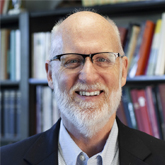
Jim Brownson is retired after three decades of professorship and leadership at Western Theological Seminary in Holland, Michigan, including a lengthy tenure as the James I. and Jean Cook Professor of New Testament. He is ordained in the Reformed Church in America and has served as a General Synod professor. Jim is also a published author, many times over. His most recent book is Questions Christians Aren't Supposed to Ask (2021).

GotQuestions.org is a ministry of dedicated and trained servants who have a desire to assist others in their understanding of God, Scripture, salvation, and other spiritual topics. We are Christian, Protestant, evangelical, theologically conservative, and non-denominational. We view ourselves as a para-church ministry, coming alongside the church to help people find answers to their spiritually related questions.
We will do our best to prayerfully and thoroughly research your question and answer it in a biblically based manner. It is not our purpose to make you agree with us, but rather to point you to what the Bible says concerning your question. You can be assured that your question will be answered by a trained and dedicated Christian who loves the Lord and desires to assist you in your walk with Him. Our writing staff includes pastors, youth pastors, missionaries, biblical counselors, Bible/Christian college students, seminary students, and lay students of God's Word.


